
Four page types build a complete trail record. Hike entry pages capture trail name, region, distance, elevation, times, difficulty, weather, surface type, and companions. Trail difficulty rating tracker pages grade every trail in one reference grid. Seasonal hike summary pages break the year into four sections with hike names and miles per season. Personal hiking records pages preserve lifetime milestones in static fill-in fields.
Without a system, trail details scatter across phone notes, photos, and memory — and most of it disappears within a month. The Hiking Log Book centralizes every stat in one structured record: a difficulty tracker that builds a comparative library, seasonal summaries that reveal patterns, and personal records that preserve the milestones worth remembering.
This journal is built for regular adult hikers who hike multiple times per season and want a cumulative trail record beyond a simple entry log. It suits hikers who track stats, compare difficulty across trails, and want a structured system for reviewing progress at the end of every season and year.
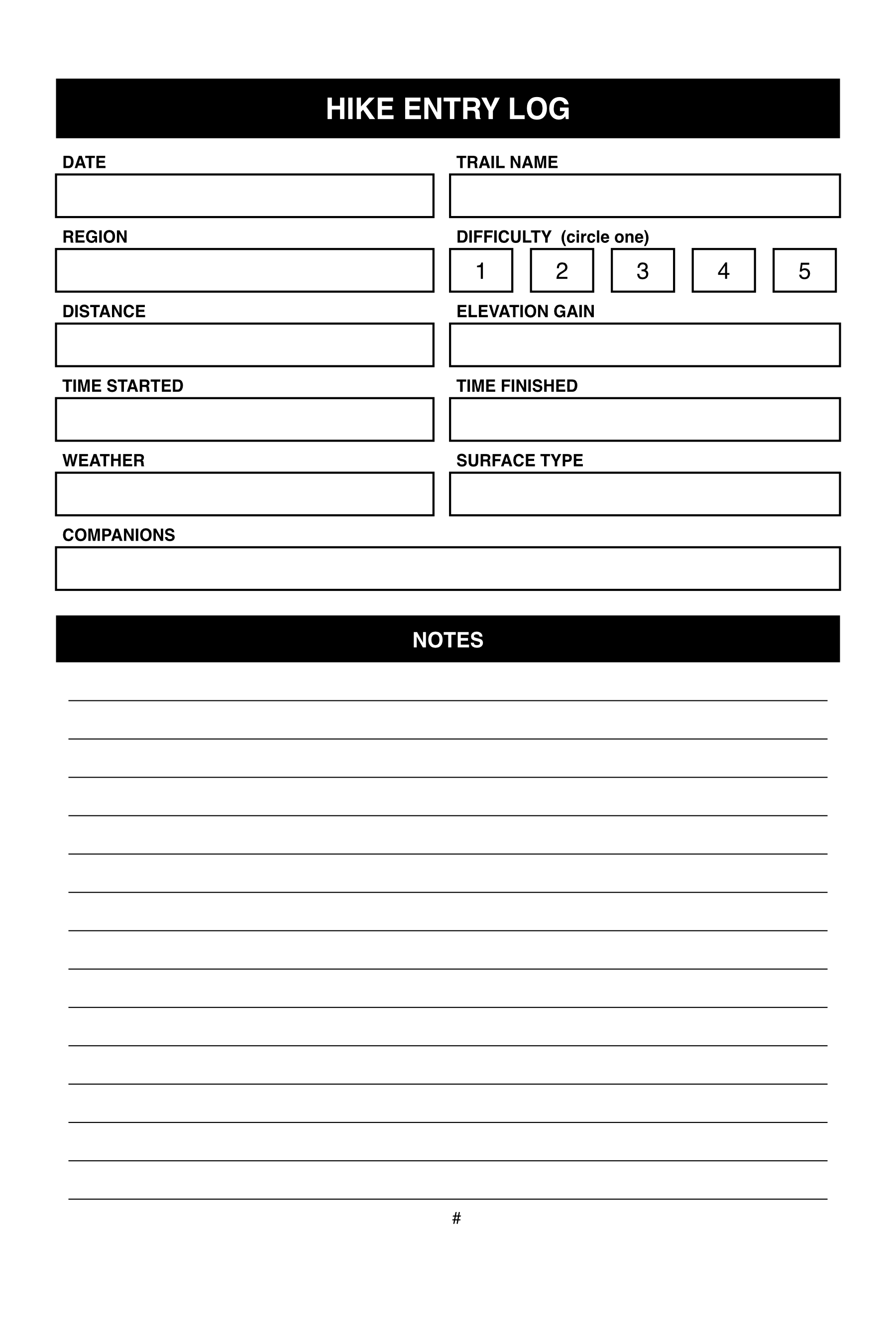
Record every hike's key stats — trail, region, distance, elevation, times, difficulty, weather, and surface — on one self-contained entry page.
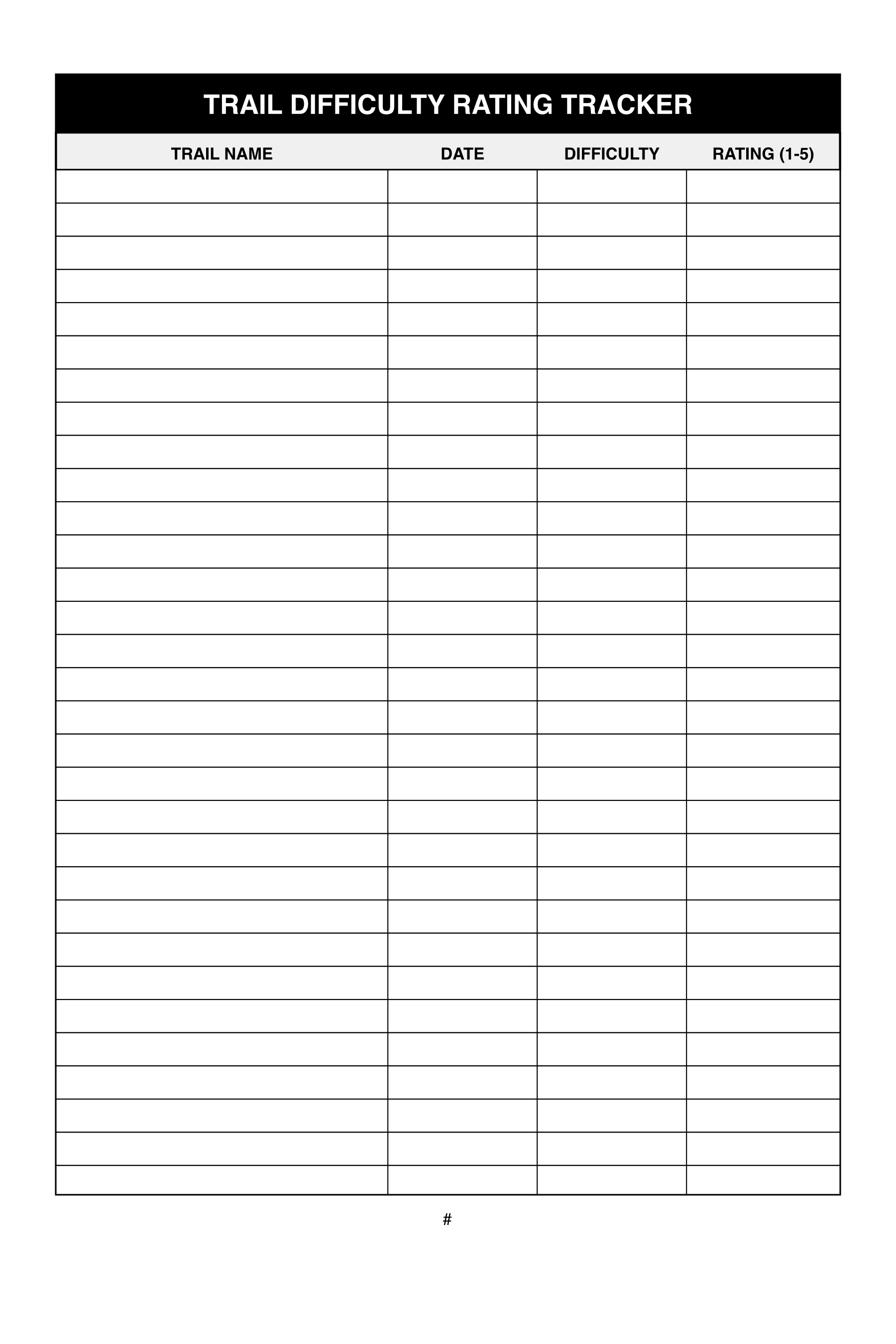
The trail difficulty rating tracker builds a growing comparison grid — every trail rated, dated, and filed in one reference page.
Seasonal hike summary pages divide the year into four natural sections, capturing every trail and mile hiked per season.

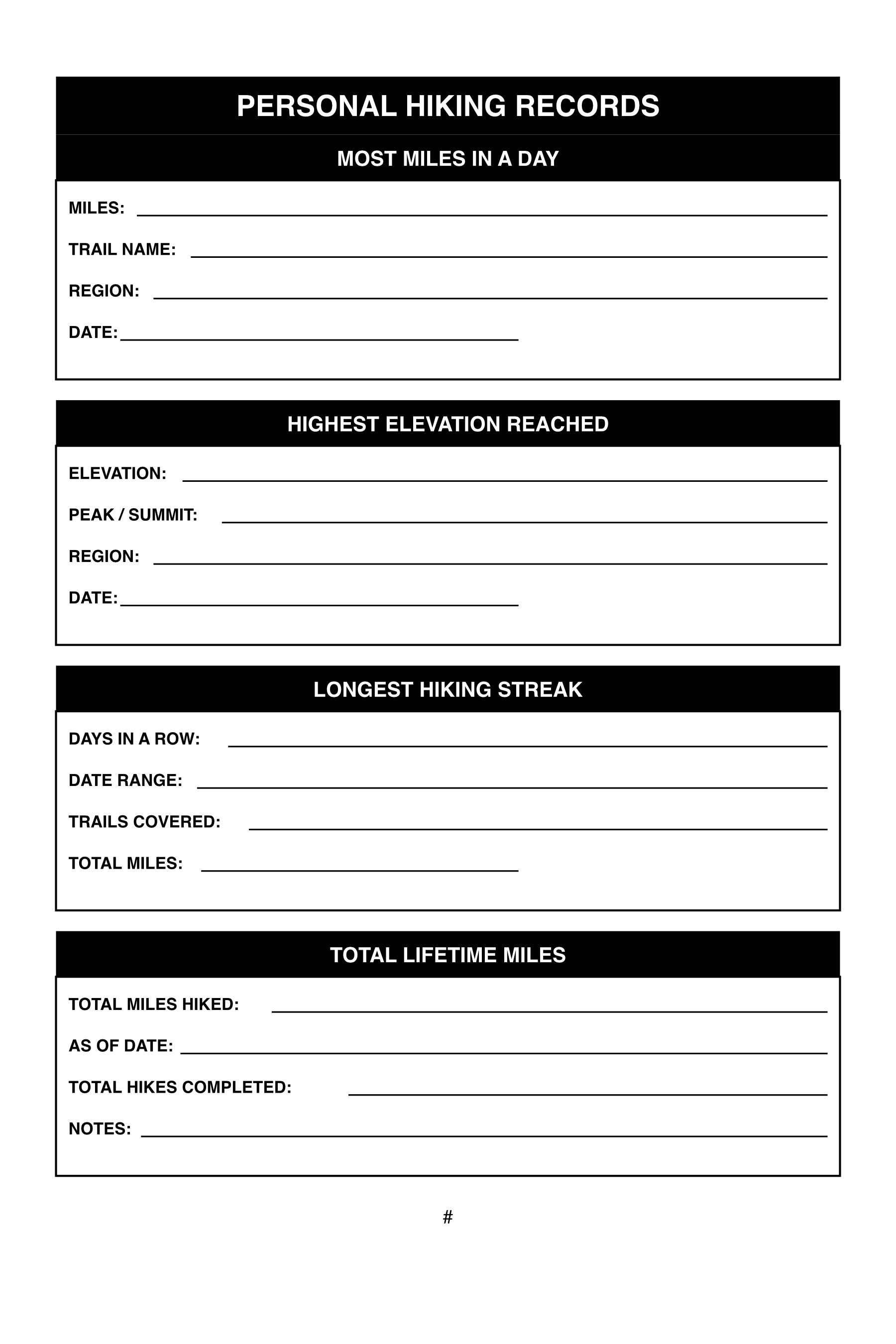
Personal hiking records pages preserve your lifetime milestones — most miles in a day, highest elevation, longest streak, and total lifetime miles.
Welcome to The Hiking Log Book — a complete trail journal built for hikers who want to keep a real, detailed record of every hike they take. Whether you are a weekend trail walker or someone who plans hikes months in advance, this book gives you a consistent, easy-to-fill format for every outing, plus reference pages to track your progress and celebrate your milestones over time.
The Hike Entry Log makes up the bulk of this journal with 100 entry pages, one per hike. Each page follows the same structure so you always know where to find what you need. Start at the top with the date and trail name, then add the region where the hike is located. Record your distance and elevation gain, your start and finish times, and the surface type — paved path, rocky trail, mixed terrain, or anything else. Circle your difficulty rating from 1 (easy) to 5 (very challenging), note the weather conditions, and write down who hiked with you. The notes section at the bottom of each page is yours to use freely. Write about what you saw, how you felt, what you would do differently, or what made this particular hike worth recording.
The Trail Difficulty Rating Tracker is a quick-reference grid that gives you a running comparison of every trail you complete. Log the trail name, the date you hiked it, your difficulty rating, and your overall personal rating out of five. Over time this page becomes a useful planning tool — you can look back and see which trails you rated most highly, which you found hardest, and which are worth revisiting.
The Seasonal Hike Summary pages break your hiking year into four seasons. For each season, log the name and miles of every hike you complete during those months. The seasonal breakdown makes it easy to see your activity patterns — which seasons you hike most, which months are quietest, and how your mileage shifts through the year.
The Personal Hiking Records pages are your hall of fame. Four fields track your all-time bests: most miles in a single day, highest elevation reached, longest hiking streak, and total lifetime miles. Fill these in whenever you set a new personal record and keep them updated as you push your limits. These are the numbers that tell the story of your growth as a hiker.
Start with your next hike and fill in every field. The more detail you put in, the more valuable this journal becomes.