Every practice page includes pronunciation support to guide you through the sounds of the alphabet. It is like having a private tutor built into your notebook allowing you to study with confidence anytime anywhere.
This workbook goes beyond simple drills. With dedicated dialogue writing and dictation prompts you are encouraged to use the language in real world scenarios making your study sessions feel personal and meaningful.
Use the specialized vocabulary lists to keep track of the words that matter most to you. Whether it is lyrics from your favorite song or lines from a drama you can build a dictionary that is entirely your own.
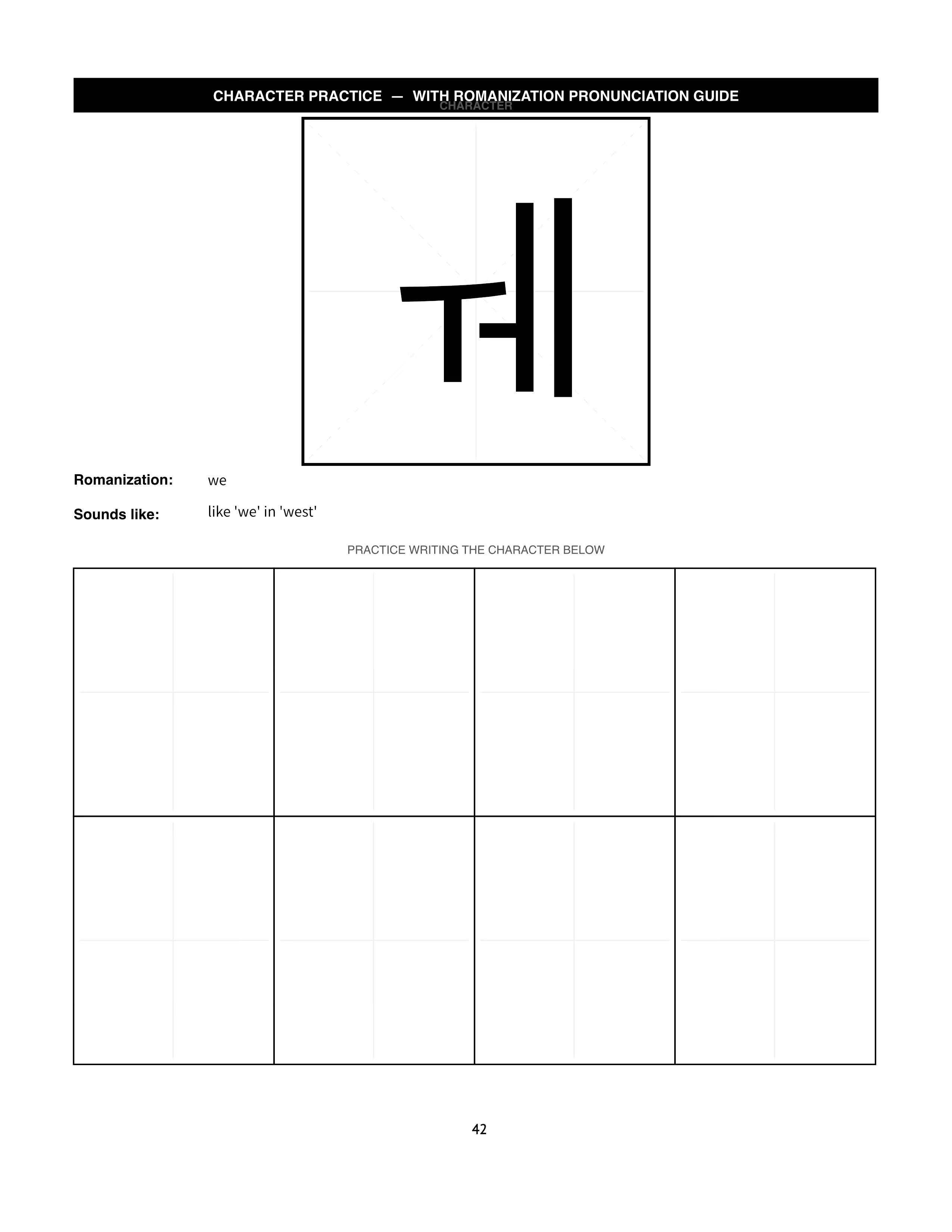
Character Practice Spreads featuring integrated Romanization pronunciation labels for easy self study.
Dialogue Writing sessions to build conversational muscle.
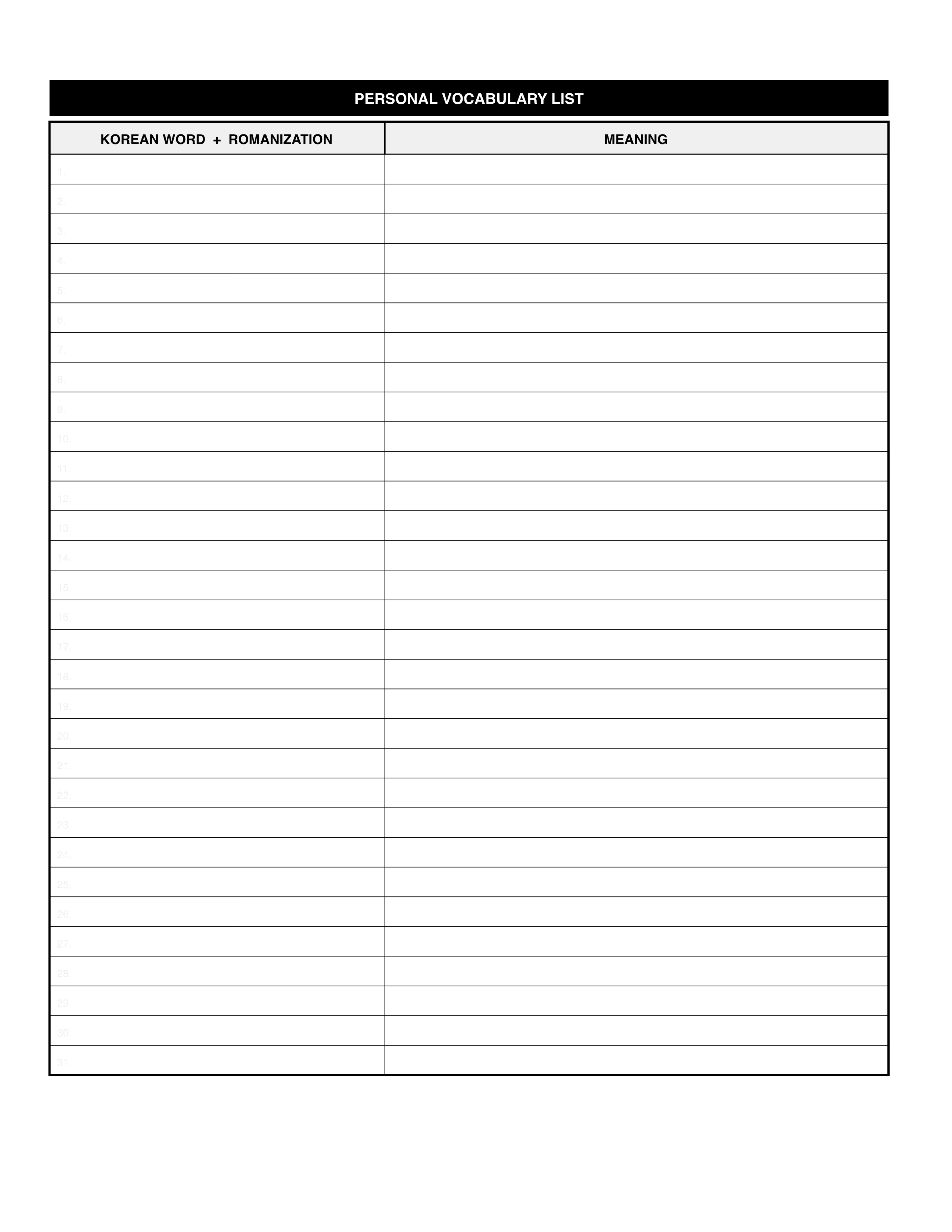
Personal Vocabulary List updates to track your growing lexicon.
Dedicated Sentence Stem Dialogue pages and Lined Note areas for complete creative control.
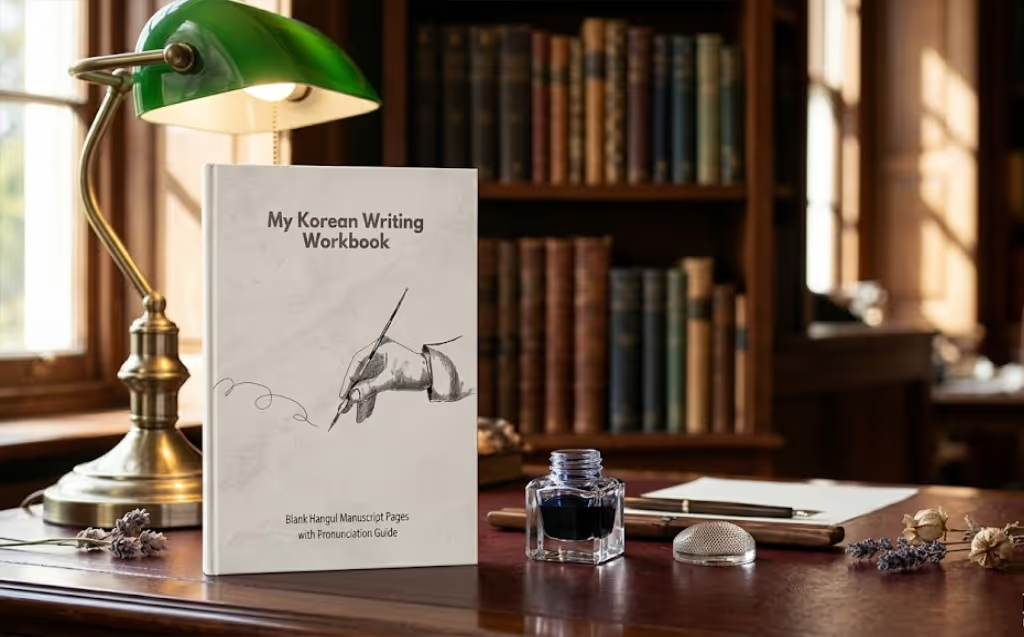
Welcome to My Korean Writing Workbook. This book was made for self-study learners — K-pop fans, K-drama fans, and independent learners who want to learn Hangul on their own, at their own pace, without a classroom or a teacher. Every page in this workbook gives you the practice space and the pronunciation support you need to learn confidently and keep going.
Start with the Character Practice pages. Pages 5 through 44 give you one full page for each Hangul character. Each page has a large centered practice box where you can trace or write the character, with a romanization line below it so you can always see how the character is pronounced in English letters, and a pronunciation hint line so you can remind yourself of the sound. Below those labels, eight open practice boxes give you plenty of space to write the character repeatedly until it feels natural in your hand. Begin here. Work through the characters in the order that matches your study materials, or follow the traditional Hangul sequence from consonants to vowels. Take as many pages as you need for each character before moving on.
Use the Manuscript Rows for open writing practice. Pages 45 through 84 give you forty pages of clean two-line ruled rows — the same format used in traditional Korean handwriting practice. The top and bottom lines define your writing zone, and the light gray guide line in the middle helps you maintain consistent character height. Use these pages to write characters freely, practice spelling vocabulary words, put consonants and vowels together into syllable blocks, or simply fill a page with whatever you are currently studying. These rows are yours to use without structure or rules.
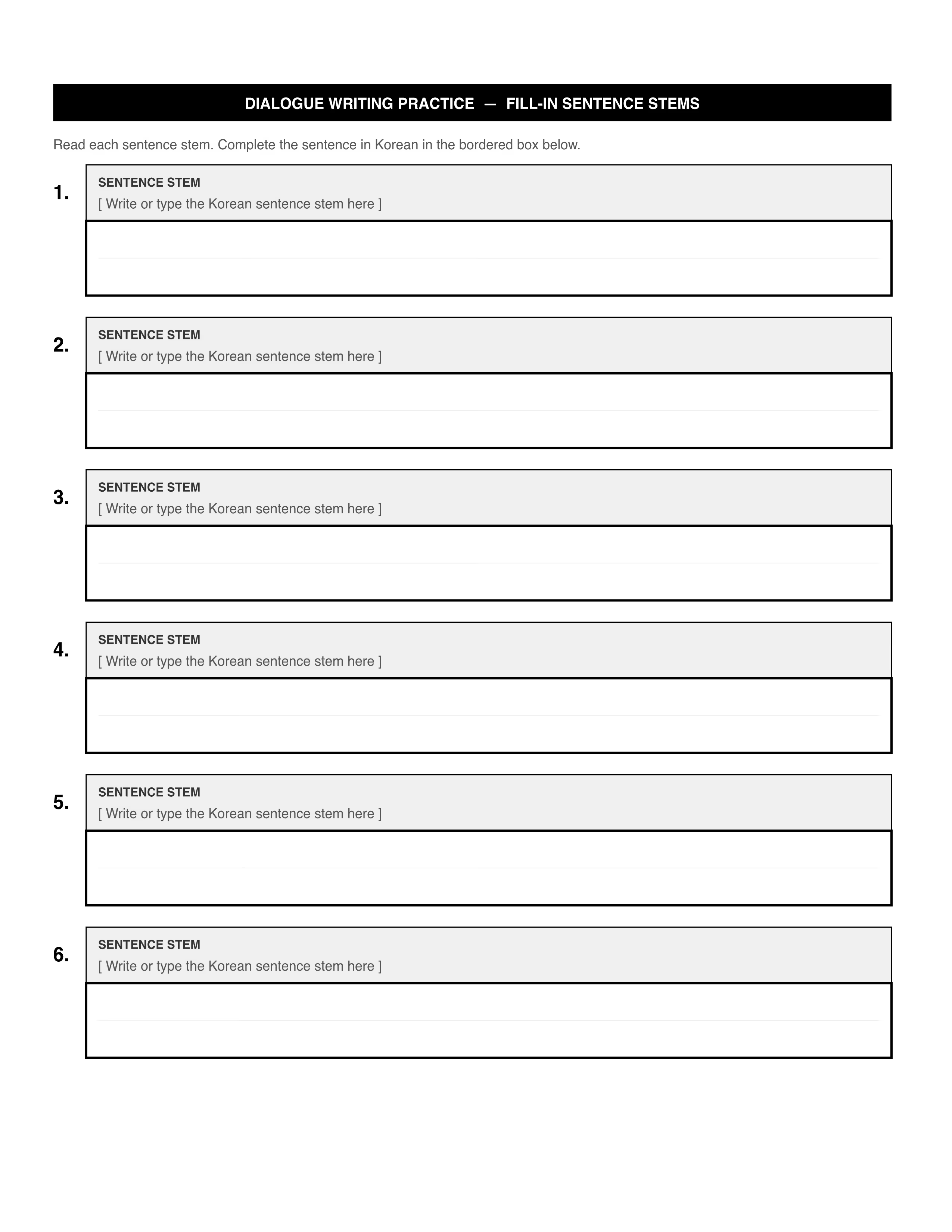
Practice real Korean through the Dialogue Pages. Pages 85 through 104 contain fill-in dialogue practice pages. Each entry gives you a sentence stem — the beginning of a sentence or phrase in Korean — in a shaded box, followed by a white bordered box where you complete the sentence in your own words. You can use these pages with your current study material, fill in vocabulary you have been learning, or use them as a creative writing space to try building your own Korean sentences. The dialogue format helps you go beyond single characters and start thinking in phrases, which is a huge step forward in any language.
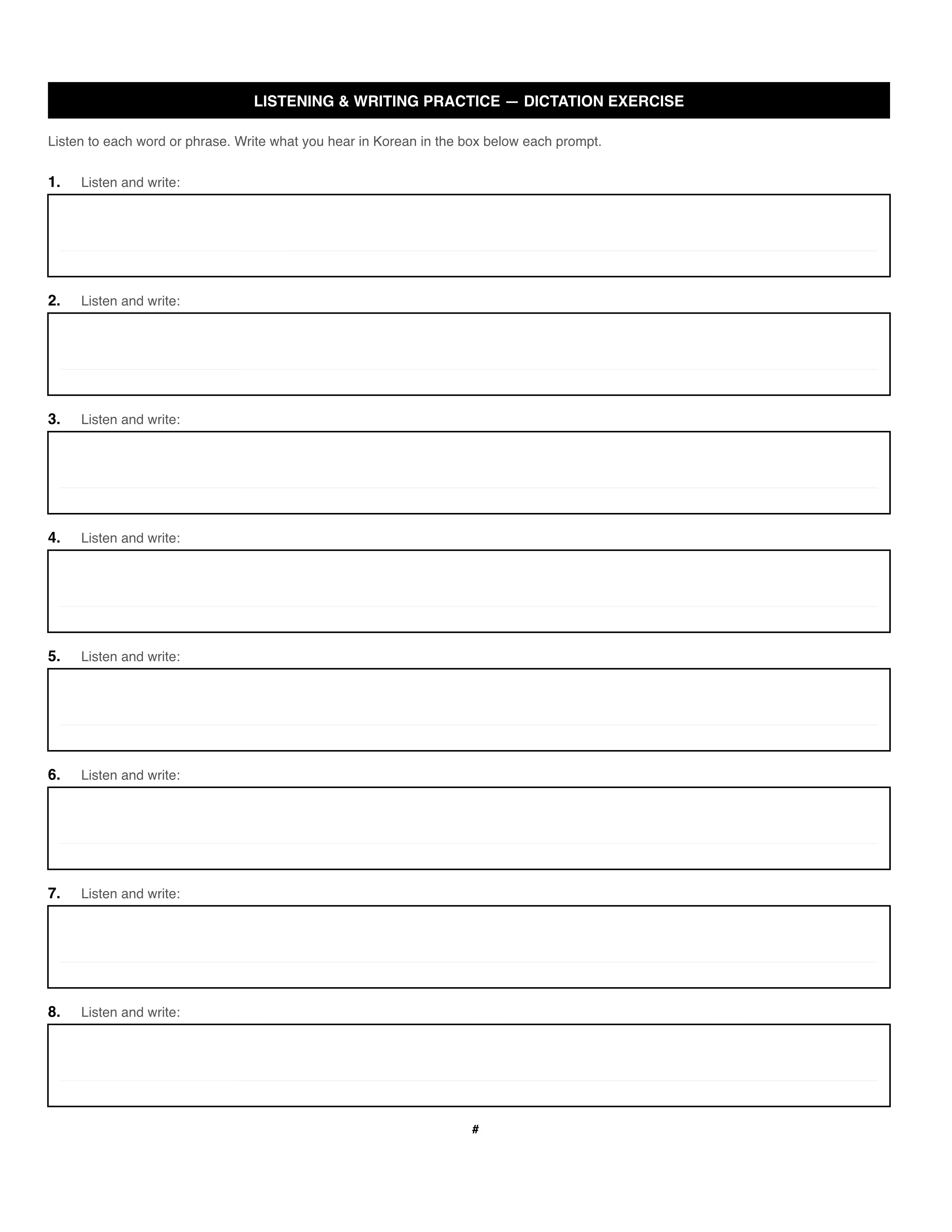
Build your listening skills on the Dictation Pages. Pages 105 through 114 are structured for listening and writing exercises. Each page has eight numbered items with a bordered writing box below each prompt. Use these with an audio resource — a textbook audio track, a vocabulary app, or any Korean language content you are listening to. Pause, listen, and write what you hear inside each box. If you do not have a listening resource, you can use these pages as dictation exercises by writing out words or phrases from memory after studying them.
Record your personal vocabulary on the Vocabulary List Pages. Pages 115 through 124 have two-column vocabulary tables with numbered rows. The left column is for the Korean word and its romanization, and the right column is for the English meaning. Use these pages as your running personal dictionary — add words as you encounter them in dramas, songs, apps, or your study materials. Keeping your vocabulary in one place makes review much faster and helps you see how your word bank is growing over time.
Use the Notes pages whenever you need extra space. Pages 125 through 128 are free-lined pages for any notes that do not fit neatly into the other sections — grammar observations, phrases you want to remember, study goals, or anything else from your learning journey. There are no rules. These pages are yours.